Sunday, August 15, 2010

Short theme: vegetable purées

Over the past two weeks I did some experimentation with vegetable purées.

General principles:
  • Texture transformation:  especially in the case of the cauliflower and beets, the resulting texture is magically different -- almost unrecognizable.
  • versatility:  a single purée can often be used in several of the following ways:  soup, flavoring base for pilaf-style starch (quinoa, couscous, bulgar wheat, etc.), pasta sauce, crostini spread, sauce over meat, stand-alone side dish, flavoring in salad dressing.
  • fat/oil substitute:  the purée can often eliminate or reduce the need for added cream, butter, etc. in a pasta sauce or soup.


Cauliflower purée
My concoction was based closely off of this recipe.  Being without sour cream, I added 1 tablespoon of yogurt and increased the butter from 1 to 2 tablespoons and added a pinch of sugar to compensate for the sourness of the yogurt.  The result  had a nice mild flavor, yet distinctly of cauliflower.  In my opinion, the texture was not too different from nice creamy grits.  My housemate Mike was certain that it was or had potato  in it.  Next time it might be good to try it with red meat or roasted salmon.

cauliflower purée with baby potatoes and smoked salmon


Red beet purée
Tried to follow this recipe.  In the end, my mix was the following (approximately):
  • 1 pound cooked beets, peeled
  • one clove garlic
  • dash cayenne pepper
  • stems of one half bunch of coriander (about 2 tablespoons chopped)
  • 12-15 leaves of mint
  • 1/4 teaspoon each of cumin and coriander
  • 1 tablespoon balsamic vinegar
  • 1 tablespoon extra virgin olive oil
  • 3 tablespoons yogurt
  • Salt ( roughly 1/4 teaspoon)
The mint was very, very subtle; add more next time.  Additionally, the spice level could be boosted a bit.  Overall, the spread was excellent.  Mike gave it high marks and Michelle said it greatly exceeded her expectations.

Beet purée on crostini


Roasted red Bell Pepper purée
I made the base sauce following this basic procedure, and reduced the oil from about 1/2 cup to 3/8 of a cup.  The basic purée had a slightly "foamy" or frothy texture -- very light in density.  I did a couple of things with this pepper sauce.  First, I made a drizzle sauce for rock cod by combining approximately 5 tablespoons of the sauce base with about 2 mL of  basalmic vinegar.  I realized that lemon juice on the fish does not combine well with the bitterness of the roasted pepper.  Also, it's imperative that the sauce and fish be served very hot.  Otherwise, I thought it worked well.   Secondly, I used about 2 tablespoons of the sauce as a flavor base for quinoa.  Finally, I mixed it with a bit of lemon juice and water to make a salad dressing, which worked out decently.
Roasted red pepper sauce over pan-fried rock cod and cilantro


Sweet pea custard/timbale
The recipe comes from "The modern vegetarian" by Maria Elia.   See the recipe in the image below.  I reduced the cream by about  30%.  The texture of the custard was nice and delicate, much like a soufflé.  The little pieces of pea were definitely distinguishable since I used a food processor instead of a blender.  The egg flavor was prominent alongside the pea and mint.  We discovered that it is definitely better served warm than chilled.

Sweet pea custard

Recipe for Sweet pea custard
Summer squash sauce
This was my one true improvisational work amongst these 5 vegetable purées.  I couldn't find many recipes out there for sauces of summer squash.  There are many that use butternut squash or other winter squashes; for example, this one.  The general template seems to be: the squash, olive oil, aromatics, spice (e.g., nutmeg), herbs and cheese or cream.  With a base sauce of zucchini and patty gold squash, I made a portobello mushroom dish and two different pasta dishes.  Ingredients for the basic sauce were:
  • one large zucchini
  • An equal mass of patty gold squash
  • About one cup of chicken broth
  • one medium onion
  • one garlic clove
  • 1 tablespoon  olive oil
  • 1 tablespoon thyme leaves
  • ~25 basil leaves, coarsely chopped
  • dash of nutmeg
  • 4 teaspoons cream
  • 1 teaspoon lemon juice, or to taste

Portobello mushroom with squash sauce

Fusilli with bacon, mushroom, black-eyed peas and squash sauce
The portobello dish did not work well with the sauce -- it just had too strong of a flavor for the mild squash, and the texture was not a very good match either.  The first fusilli pasta had the additional ingredients of bacon, portobello mushroom, and black-eyed peas.  I thought it worked well with the possible exception of the black-eyed peas, which have a strong flavor as far as beans go.

The second pasta dish had shrimp seasoned with a little Hungarian paprika, julienned red bell pepper, and garlic added to the base squash sauce.  This turned out to be my favorite of the three summer squash sauce  dishes I made.
Fusilli with shrimp and red pepper


Posted by Picasa

Wednesday, July 28, 2010

Marinating

Over the past 2 weeks I did a handful a dishes involving marinating (red meat, chicken, seafood, tofu, and vegetables).  Marinating serves three main purposes: first, to infuse flavor, secondly, to increase the perceived tenderness of the item, and thirdly, to increase the moisture content in the item.  I say "perceived tenderness" because several sources claim that the acid of a marinade doesn't actually significantly break down the item, but rather increases saliva production in our mouths, which contains a large amount of enzyme that actually does break down the item.

Generalizing a marinade
In my mind, there are 4 main aspects of a marinade mixture: salt, acid, duration  (of soaking the meat, tofu, etc.) and other flavoring ingredients.

  • Salt:  increases moisture/juiciness of the meat and adds flavor, obviously.   In my recipes here, the salt concentration is generally between 3 and 8%, going up as high as 10% for Alton Brown's shrimp brine and also for the Mediterranean chicken marinade.
  • Acid:  increases perceived tenderness of the meat.  In the recipes here, the concentration of acidic ingredient (citrus juice, vinegar, etc.) in the marinade  is usually around 35% and goes as low as 20% for the teriyaki and somewhat higher for the marinated vegetables.
  • Duration:  obviously, the longer it soaks, the stronger the flavor and more tender/juicy the meat.  On the flipside, if it sits too long, it it will become too salty or overly acidic or will start to break down and become mushy.   In the recipes here, the duration is usually between 4 and 24 hours (and less than 1 hour for the seafood).  In general, the thicker the piece of meat, and the more surface area there is, the longer the duration should be.
  • Other flavorings/ingredients: some of the ingredients that kept reappearing in the recipes here include: chopped herbs, spices, garlic/ginger/shallots, chile/pepper,  flavored oils, soy, mustard.

Monday, July 12, 2010

Mexican-spiced pork tenderloin with corn salsa

The spice rub:
  • 1 teaspoon salt
  • 2 teaspoons ancho/guajillo (the labeling wasn't clear) chili powder
  • 1 teaspoon cinnamon
  • 1/3 teaspoon allspice
  • 1 teaspoon Mexican oregano

Procedure:
  1. rub meet with spice rub and tie the small end to give the meat a more regular shape
  2. Preheat the grill to high
  3. Brush the meat lightly with oil
  4. Sear for 4 minutes with the lid closed (Next time, leave lid open because was charred)
  5. Flip, turn heat to medium, Insert thermometer, and sear for another 4 minutes
  6. Turn heat to medium low and cook until temperature reads 160 (next time, try 155°F)

Corn salsa:

  • One fresh tomato, diced, some seeds removed
  • One half small onion, chopped and rinsed under cold water
  • Cilantro, small bunch chopped
  • 1/2 jalapeno, de-ribbed And minced
  • Corn, one ear grilled and kernels sliced off
  • Pinch of salt

Review and notes:
The pork was very good. The salsa was a little bit "dry". Perhaps partially purée it next time and/or char/grill tomatoes or diced more finally.


Posted by Picasa

Chicken Tikka (grilled)

After going to an Indian buffet last week, I wanted to try my own hand at chicken Tikka (not masala). The recipe I used was an amalgamation of several ones I found online:

  • 3/4 cups of regular fat yogurt
  • 2 tablespoons red masala (homemade paste)
  • 1 teaspoon turmeric
  • 1 tablespoon garam masala
  • 1 tablespoon olive oil
  • pinch of salt (red masala already has a fair bit)
  • 1 lb chicken drumsticks
  1. Mix Marinated and put in a zip lock bag with chickenr
  2. refrigerate for... 8-24 hours? ( I can't remember how long I went for.)
  3. Grill over high heat until browned and for about 15 (?) minutes total.

Review: super tasty; a few too many charred spots, though. Maybe let more of the marinade drip off and baste with it during the cooking process?


Posted by Picasa

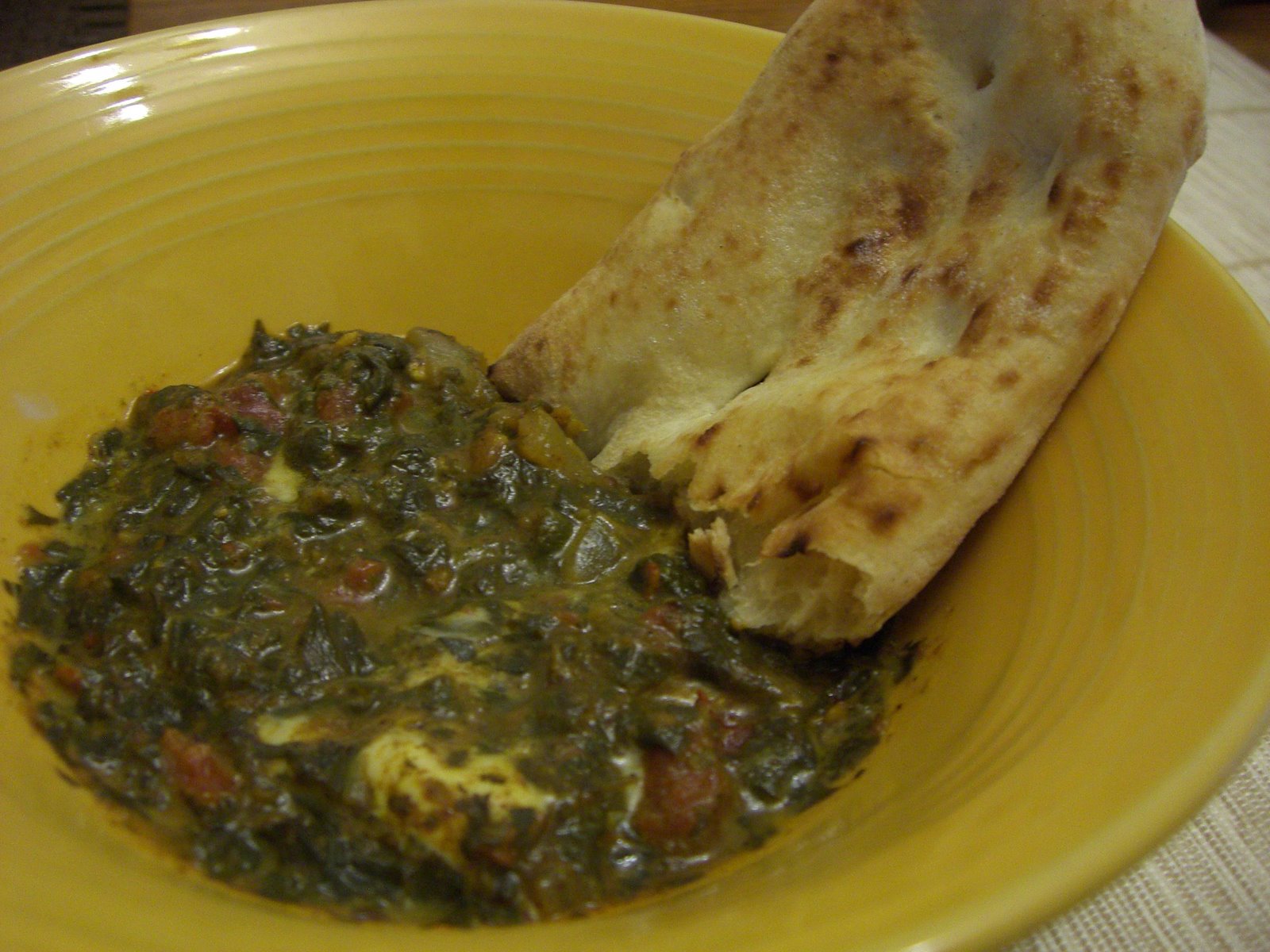
Palak Paneer


Recipe (from Shveta at Trovix):

Ingredients:

  • Spinach : Half a bag of costco (I used roughly 8-10 ounces)
  • Red Onions: 1 big onion sliced thin. Regular onions would do too.
  • Tomatoes, 2 fresh (I used a 14oz can of diced tomatoes, which was too much):  see "spinach prep" below
  • Grated Fresh Ginger : 2 Tablespoons
  • Grated Fresh Garlic : 3 big cloves should be good.
  • Green Chillies: 2-3 (Note: instead of the raw ginger-garlic-chili combo, I used a heaping teaspoon of my red masala, which contains all 3)
  • Fresh Coriander/Cilantro:4-5 strands
  • Fresh Mint leaves: 8-9 leaves (I used closer to 20-25 leaves and it worked well)
  • Dried crushed Fenugreek (also called Kasuri Methi):1 teaspoon (optional)
  • Paneer ( I tried using Mexican queso fresco that I had on hand, but it proved overly crumbly)
Prepwork for Spinach:
  1. .Put the spinach in water. Let it boil(You would know as the leaves become soft) in an open pan for 10-15 minutes. (Meanwhile You can do the prep work for tomatoes and ginger-garlic-chilli paste.)
  2. Once the spinach looks suitably boiled, take the pan,drain the hot water thru the strainer and pour cold tap water.(To make it cooler faster,you can let the spinach remain in cold water filled pan for sometime).
  3. Once done, strain it using the strainer and put it in the mixer-grinder
  4. Add the Mint leaves, Fresh cilantro and the Dried fenugreek
  5. Make a coarse paste out of it (I simply chopped it finely with knife on cutting board; would have been better if it was even finer)
Spices:
  • Cumin seeds:1 teaspoon
  • Salt: According to your taste
  • Red chilli powder:1 tbsp (I left this out because I used my red masala paste)
  • coriander powder: 2 Tbsp
  • Turmeric: 1/3 tbsp.
  • Chaat masala: 1 tbsp/Tbsp (gives a lil sour taste) (I haven't got my hands on this spice yet)
  • Garam Masala: 1 tbsp

How to:
  1.  Take a pan, preferably non stick.
  2.  Add 4 tablespoons cooking oil(Corn/sunflower/olive)    whatever you have at home. Keep it on Medium
  3. Add some Cumin seeds when you think oil has slightly    heated up.
  4. Add the grated ginger-garlic-Green chilli paste( You can grate them all together) to the pan.
  5.  Saute till the paste becomes light pink.
  6. Add the onions (sliced up and long).let them go a lil brown. Keep stirring so they won't stick to the pan.
  7. Add the spices (Redchilli-coriander-turmeric) to the pan.
  8. You can sprinkle lil water(2-3 tablespoons) to make sure the spices don't burn too much.
  9. Let them cook for 2 minutes. Add the Boiled tomatoes puree. cover it with a lid and let it cook for 5-7 minutes. Keep Stirring.
  10. Once you think the gravy looks suitably cooked( you will know if the color changes or let it cook as in Step 9.), Add the spinach mix paste.
  11. Mix it all well. Now let it cook for 10-15 minutes. keep the gas on Medium.
  12. Add grated cottage cheese(2x1x1 slab) or more if you like.
  13. 13.Add the chaat masala and Garam Masala. Check for salt now.
  14. Cover it with a lid for few minutes.

Review:
  • Very tasty overall.
  • Queso fresco does not work as a substitute for paneer. :)
  • Maybe a little too much tomato? Might be better if the tomato was more finely chopped or puréed.


Posted by Picasa

Saturday, July 10, 2010

Indian-spiced roast cauliflower

From Jamie Oliver's: "Cook with Jamie".

This is a really unique way to serve cauliflower, at least in the US. I think I may have slightly overcooked the spices in the oil in the first up, but it still turned out really tasty. Here's the ingredient list:
  • one head of cauliflower florets
  • Sea salt
  • olive oil
  • butter
  • cumin seed, whole
  • coriander seed, whole
  • dried chili
  • almonds blanched, smashed (I believe I used roasted almonds, instead; how does blanching taste different?)
  • lemon zest and juice
d


Posted by Picasa

Chickpea salad (Turkish-inspired)

This was sort of a blend of several salad recipes I had done during Turkish month.
Ingredients:
  • 1 cup dried garbanzo beans, cooked
  • one tomato
  • 3/4 cup chopped parsley
  • 1/4 cup chopped mint
  • pinch of ground coriander
  • 3 tablespoons dressing:  50/50 lemon juice and olive oil with salt and pepper to taste

Preparing the chickpeas:
  • soaked for 24 hours
  • simmer for one hour
By the end of cooking, many of the garbanzo bean skins were coming off and some of the beans/peas were splitting in half.  Undesirable in my opinion.

In the end, I thought this salad turned out really well: meaty from the beans, fresh with the parsley and interesting flavor with the mint and coriander.


Posted by Picasa